It’s significant that the most recent coin in the stash is from 1921, according to Mary Heimann, a professor of modern history and an expert of Czechoslovak history at the University of Cardiff in the United Kingdom. That was the year the Soviet-Polish War ended when the Treaty of Riga was signed, she said, but it was also a year of financial crisis in Czechoslovakia, the former state that separated peacefully into the Czech Republic and Slovakia in 1993.
“It was an unstable period, there was a downturn in the economy and widespread unemployment. For that reason, it’s not that surprising somebody would think of burying a stash of gold at that time,” she added.
Despite Novak’s suggestions the stash was likely left around 1945, Heimann thinks that if that were the case, more recent coins would probably be in the mix. The absence of local currency, however, makes things murkier.
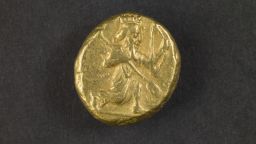
“(The person who hid the coins) could have been a collector, or someone who worked in museums. Or someone who stole a collection from somewhere. This is borderland territory, it separates what’s today the Czech Republic — what was in the past Czechoslovakia — from Poland,” Heimann said. “The first World War didn’t end overnight, the ramifications were still being felt everywhere. There was still instability of borders, there was still economic crisis, there was quite a lot of crime. I suppose you might expect that in those border regions and in places of mixed ethnicity, there would be particularly high tension. So it might be that someone could be more frightened of the future if they lived in those areas than someone who lived elsewhere.”
Once the items have undergone further material analysis, they will be preserved and stored in the museum’s coin collection. A short exhibition is planned for the fall.
And then, who will get to keep the loot? According to Czech law, Novak said, archaeological finds are the property of the local regional administration from the moment of discovery.
“In this case, the treasure was correctly handed over to the museum,” he said. “The finder is entitled to a financial reward, which depends on the value of the metal or historical appraisal.”