Ten gold bracelets, 17 cigar cases, a powder compact, a comb, and a whopping 598 gold coins: The items are all part of a valuable and somewhat mysterious stash, found by chance by two hikers in the northeastern Czech Republic.
The hikers, who wish to remain anonymous, were taking a shortcut through the forest in the Krkonoše Mountains — a popular hiking spot — when they saw an aluminum box sticking out of a stony wall.
After they opened it and discovered the loot, they immediately took it to the Museum of Eastern Bohemia, in the nearby town of Hradec Králové, according to Miroslav Novak, the head of the archaeological department at the museum.
“The finders came to our museum’s numismatist (coin expert) without a prior appointment. Only after that did archaeologists begin to deal with the find and set out to explore the site,” Novak told CNN in an email.
Who may have hidden the treasure and why is still up for debate, but one thing is certain: The stash can’t be more than about a century old, because one of the coins is dated 1921. As for the rest, there are only hypotheses, for now.
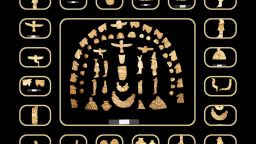
“It is most likely related to the turbulent period before the start of World War II, when the Czech and Jewish population was leaving the border area, or to 1945, when the Germans were leaving,” Novak said.
A complete historical appraisal of the stash is still ongoing, and two of the cigar cases are tightly shut and remain unopened, but the metal value of the gold coins alone — which weigh 3.7 kilograms, or 8.16 pounds — is 8 million Czech koruna, or about $360,000, according to the museum’s coin expert, Vojtěch Brádle.
Local rumors
The finding has sparked interest in the surrounding community, and Novak says the museum is getting calls with “various local rumors,” which he hopes could help solve the riddle of the gold’s origin.
Speculation is fueled by the fact that, oddly, there are no local coins in the mix. “Half are of Balkan origin and the other half of French origin,” Novak said. “Central European coins, such as German ones, are completely missing. But the find is located on the former ethnic border between the Czech and German populations.”
Among the theories submitted by the public, Novak said, is one that traces the ownership of the coins back to wealthy families from the surrounding area, such as the the Swéerts-Špork family, the owners of the Kuks estate, a large baroque complex overlooking the Elbe River that includes a summer residence, a spa and a monastery. Another suggests the cache could be war spoils of Czechoslovak legionnaires.

Findings like this are not especially common for the area, Novak noted.
“About nine kilometers southeast, a hoard of 2,700 silver denarii (a type of European trade coin) from the 12th century was found ten years ago,” he said by email. “Many residents left this area during the 20th century, which is why there are many abandoned farms here.”
Vojtěch Brádle agreed that the makeup of the stash is unusual.
“Usually, Czech finds from the 20th century mainly contain German and Czechoslovak coins. There is not a single one here,” he said. “Most of the pieces from this treasure did not travel directly to Bohemia. They must have been somewhere in the Balkan Peninsula after the First World War. Some of the coins have countermarks from the former Yugoslavia. These were only minted on coins sometime in the 1920s or 1930s. At the moment, I do not know of any other Czech find that would contain coins with these countermarks.”
More research is required, he added, to understand the metal composition of the remaining items, and obtain a more accurate overall value.